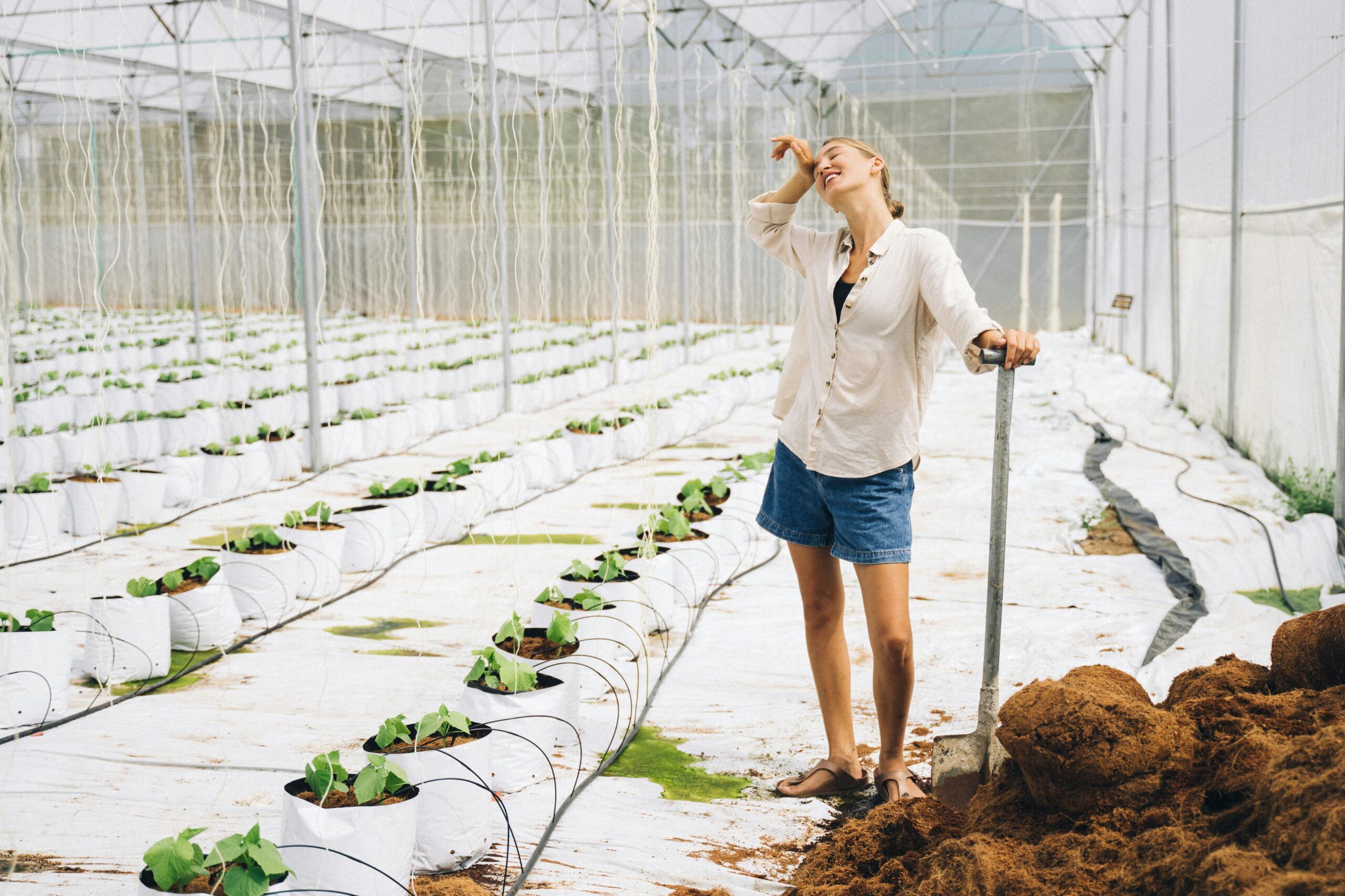
Modern agriculture stands at a transformative crossroads where artificial intelligence, climate data, and plant science converge to address global food security challenges.

As climate variability intensifies and the world population continues to grow, traditional breeding methods alone can no longer keep pace with the urgent need for resilient, high-yielding crop varieties. Farmers and researchers are increasingly turning to climate intelligence, AI-powered phenotyping, and sophisticated predictive models to revolutionize how we develop crops that can withstand droughts, floods, heat stress, and emerging pests while maximizing productivity and nutritional value.
🌍 The Imperative for Climate-Smart Agriculture
Climate change represents one of the most significant threats to global agricultural productivity. Rising temperatures, shifting precipitation patterns, and increasing frequency of extreme weather events are already impacting crop yields worldwide. Traditional plant breeding, while effective, typically requires 10-15 years to develop new varieties—a timeline incompatible with rapidly changing environmental conditions.
Climate intelligence integrates real-time weather data, historical climate patterns, and future projections to inform agricultural decisions at every level. This approach enables breeders to anticipate environmental stresses before they occur and develop varieties specifically tailored to future climate scenarios rather than past conditions.
The economic implications are staggering. The Food and Agriculture Organization estimates that climate change could reduce global crop yields by up to 30% by 2050 without adaptive measures. Climate-intelligent breeding programs offer a pathway to not only maintain but potentially increase yields despite challenging environmental conditions.
🤖 AI Phenotyping: Seeing Plants Through Digital Eyes
Phenotyping—the process of measuring observable plant characteristics—has traditionally been labor-intensive, subjective, and limited in scope. AI-powered phenotyping platforms are transforming this fundamental aspect of plant breeding by enabling researchers to collect and analyze vast quantities of plant data with unprecedented speed and precision.
High-Throughput Imaging Systems
Modern phenotyping facilities employ sophisticated imaging systems that capture multiple data types simultaneously. RGB cameras document visible plant features, while multispectral and hyperspectral sensors detect wavelengths invisible to human eyes, revealing information about plant stress, water content, and nutrient status.
Thermal imaging identifies temperature variations across plant surfaces, indicating transpiration rates and drought stress. LiDAR (Light Detection and Ranging) technology creates three-dimensional plant models, measuring height, canopy structure, and biomass with millimeter precision.
These systems can evaluate thousands of plants daily, generating terabytes of data that would be impossible for humans to analyze manually. The true power emerges when artificial intelligence algorithms process this information.
Machine Learning for Feature Extraction
Deep learning algorithms, particularly convolutional neural networks, excel at identifying patterns in complex visual data. Trained on thousands of plant images, these models can automatically detect and quantify traits such as:
- Leaf area and leaf angle distribution
- Root system architecture in transparent soil systems
- Flowering time and seed development stages
- Disease symptoms and pest damage
- Chlorophyll content and photosynthetic efficiency indicators
- Lodging resistance and structural stability
Beyond simple measurement, AI systems can identify subtle trait variations and correlations that might escape human observation. This capability accelerates the identification of superior breeding lines and reveals unexpected relationships between observable characteristics and underlying genetic factors.
📊 Predictive Models: Forecasting Plant Performance
The integration of phenotypic data, genomic information, and environmental variables enables the creation of sophisticated predictive models that forecast how specific plant genotypes will perform under various conditions. These models represent a paradigm shift from reactive to proactive breeding.
Genomic Selection and Prediction
Genomic selection uses DNA markers across the entire genome to predict breeding value without waiting for plants to mature and express their traits. Machine learning algorithms analyze relationships between genetic markers and phenotypic outcomes, creating models that estimate the performance of untested genetic combinations.
This approach dramatically accelerates breeding cycles. Instead of growing every possible cross and observing performance over multiple seasons, breeders can simulate thousands of genetic combinations in silico, selecting only the most promising candidates for field testing.
Climate-Crop Interaction Models
Advanced models incorporate climate variables—temperature, precipitation, solar radiation, humidity—alongside plant traits to predict performance under specific environmental scenarios. These models help answer critical questions: Will this variety maintain yields during prolonged drought? How will it respond to early season heat stress? What happens if flowering coincides with a predicted cold snap?
By simulating crop growth under projected future climate conditions, breeders can prioritize traits that will matter most in coming decades, such as heat tolerance, water use efficiency, or resilience to variable rainfall patterns.
🔬 Integration: The Synergy of Data Streams
The true revolution occurs when climate intelligence, AI phenotyping, and predictive models work together as an integrated system. Each component strengthens the others, creating a feedback loop that continuously improves breeding efficiency and outcomes.
Data Fusion Platforms
Modern breeding programs increasingly rely on integrated data platforms that consolidate information from multiple sources. These systems might combine:
- Real-time weather station data from breeding locations
- Satellite imagery tracking field conditions
- Automated phenotyping measurements from sensor systems
- Genomic sequencing results
- Historical yield trial data
- Soil composition and microbiome analyses
Cloud-based platforms enable collaboration across institutions and continents, allowing researchers to share data and insights while maintaining appropriate security and intellectual property protections.
Decision Support Systems
AI-powered decision support tools synthesize complex information into actionable recommendations for breeders. These systems might suggest which parent lines to cross based on complementary traits, identify optimal planting dates for evaluation trials, or flag emerging disease pressures that require immediate attention.
By handling routine analytical tasks, these tools free researchers to focus on strategic decisions and creative problem-solving that still require human expertise and intuition.
🌾 Real-World Applications and Success Stories
The practical impact of climate-intelligent breeding approaches is already visible in several crop improvement programs worldwide. Organizations ranging from international research centers to private seed companies are deploying these technologies with measurable results.
Drought-Tolerant Varieties
Research institutions have used AI phenotyping to identify wheat and maize varieties with enhanced drought tolerance. By screening thousands of lines with thermal imaging and measuring stomatal conductance through multispectral analysis, scientists identified genotypes that maintain productivity with 30-40% less water.
Predictive models validated these varieties’ performance across multiple climate zones, accelerating their release to farmers in water-stressed regions. In several cases, breeding timelines were reduced from 12-15 years to 7-8 years.
Heat-Resilient Rice
Rice production faces particular vulnerability to nighttime temperature increases, which disrupt grain filling. AI-assisted phenotyping platforms measuring minute temperature differences in reproductive tissues identified genetic lines with enhanced heat tolerance during critical developmental stages.
Climate models predicted that these varieties would maintain yields under projected 2040 temperature scenarios, providing farmers with adapted options before crisis conditions materialize.
Disease Resistance Through Early Detection
Hyperspectral imaging combined with machine learning algorithms can detect plant disease symptoms days before they become visible to human observers. This capability enables rapid screening of breeding populations for disease resistance, accelerating the identification of resistant germplasm.
In potato breeding programs, AI systems trained to recognize early blight signatures reduced the time required to evaluate resistance by 40%, while improving accuracy compared to traditional visual scoring methods.
⚡ Challenges and Limitations
Despite impressive advances, climate-intelligent breeding faces several significant challenges that researchers and developers continue to address.
Data Quality and Standardization
Machine learning models are only as good as the data used to train them. Inconsistent data collection protocols, environmental variation between phenotyping facilities, and measurement errors can compromise model accuracy. The breeding community increasingly recognizes the need for standardized data formats and quality control procedures.
Computational Resources
Processing high-resolution imagery and running sophisticated predictive models requires substantial computing power. While cloud computing has democratized access to some extent, smaller breeding programs and researchers in developing countries may struggle to access necessary computational resources.
Biological Complexity
Plants represent extraordinarily complex biological systems with countless interactions between genes, environment, and development. No model currently captures this full complexity. Predictions work best for traits with high heritability and relatively simple genetic control, while complex traits influenced by many genes and environmental factors remain challenging to predict accurately.
Implementation Barriers
Adopting new technologies requires investment in equipment, training, and infrastructure. Many breeding programs, particularly those focused on orphan crops or serving resource-limited contexts, lack funding for advanced phenotyping platforms. Bridging this technology gap remains a critical challenge for ensuring equitable access to these tools.
🚀 The Future Landscape of Intelligent Breeding
As technologies continue advancing and costs decline, several emerging trends will likely shape the next generation of climate-intelligent breeding programs.
Edge Computing and Field Deployment
Miniaturization of sensors and edge computing capabilities will enable sophisticated phenotyping directly in farmers’ fields rather than requiring specialized facilities. Drone-mounted multispectral cameras, smartphone-based disease detection apps, and portable spectrometers will make high-quality phenotyping accessible to a broader range of users.
Integration of Microbiome Data
Plant performance depends not only on genetics but also on interactions with soil microorganisms. Future predictive models will incorporate microbiome composition and function, enabling breeding programs to optimize plant-microbe partnerships for enhanced nutrient uptake, stress tolerance, and disease resistance.
Speed Breeding and Rapid Cycling
Controlled environment facilities optimized for rapid generation turnover, combined with predictive models that reduce the need for extensive field testing, will further compress breeding timelines. Some programs now envision moving from initial cross to commercial variety release in as little as 4-5 years for certain crops.
Participatory Breeding Platforms
Digital platforms will increasingly connect breeders directly with farmers, enabling citizen science approaches to variety evaluation. Farmers can provide real-world performance data from diverse environments, enriching datasets and ensuring that breeding priorities align with actual farmer needs and preferences.
🌱 Ethical Considerations and Equitable Access
As AI and climate intelligence reshape breeding, important ethical questions demand attention. Who owns the data generated by these systems? How do we ensure that smallholder farmers in developing countries benefit from these advances rather than being left behind? What safeguards prevent the concentration of agricultural innovation in the hands of a few large corporations?
Open-source approaches to algorithms and data sharing offer one pathway toward equitable access. International research collaborations that prioritize capacity building in developing regions represent another essential strategy. The breeding community must proactively address these concerns to ensure that climate-intelligent agriculture serves global food security rather than exacerbating existing inequalities.
💡 Bridging Science and Practice
The ultimate measure of success for climate-intelligent breeding lies not in technological sophistication but in real-world impact. This requires effective knowledge transfer between researchers and practitioners, as well as supportive policy environments that facilitate rapid variety release and adoption.
Extension services play a critical role in helping farmers understand and access new varieties. Seed systems must efficiently deliver improved germplasm to those who need it. Regulatory frameworks should balance necessary safety oversight with the urgency of adapting to climate change.
Public-private partnerships increasingly bridge the gap between fundamental research and commercial application, combining the strengths of academic innovation with industry’s development and distribution capabilities. These collaborations accelerate the translation of scientific advances into seeds in farmers’ hands.
🎯 Moving Forward with Purpose
The convergence of climate intelligence, AI phenotyping, and predictive breeding models represents far more than incremental improvement in agricultural technology. It fundamentally transforms humanity’s capacity to adapt food production systems to unprecedented environmental challenges while meeting the nutritional needs of a growing population.
Success will require sustained investment in research infrastructure, commitment to open data and equitable access, and continued innovation at the intersection of plant science, data science, and climate science. The technical tools now exist to revolutionize breeding; the challenge lies in deploying them effectively, ethically, and universally.
As climate impacts intensify, the window for developing adapted crop varieties narrows. Climate-intelligent breeding offers a powerful response to this challenge—one that combines cutting-edge technology with timeless agricultural goals of producing abundant, nutritious food even under difficult conditions. The revolution in agriculture is underway, and its success will profoundly shape food security for generations to come.